
After a crypto scam, the first task is evidence, not promises
After a cryptocurrency fraud, an investment scam, or an unauthorised transfer from a compromised wallet, the practice establishes what can be documented before anyone talks about what can be recovered.
Matters this service covers
- Phishing, impersonation, and fake trading platforms
- Romance and investment fraud, including schemes often called pig butchering
- Fake exchanges, fake liquidity pools, and rug pulls
- SIM swap attacks, ransomware-related transfers, and other unauthorised movement of assets
What the work actually is
Intended work is investigation, preservation of evidence, tracing where it is lawful and useful, and reporting to the proper channels. Where assets still sit at a custodial venue, the practice assesses whether a UK court order, or an order from a partner jurisdiction such as Switzerland through Crypto Justice Legal, can realistically reach them. It is not a representation that a blockchain transaction can be reversed. It cannot be.
The evidence that matters
- Transaction hashes and destination addresses
- Chat and email exports, including the names of account managers
- Bank or card references for fiat payments into the scheme
- The platform URL, screenshots of dashboards, and withdrawal refusal messages
- Any Action Fraud, police, or regulator report number
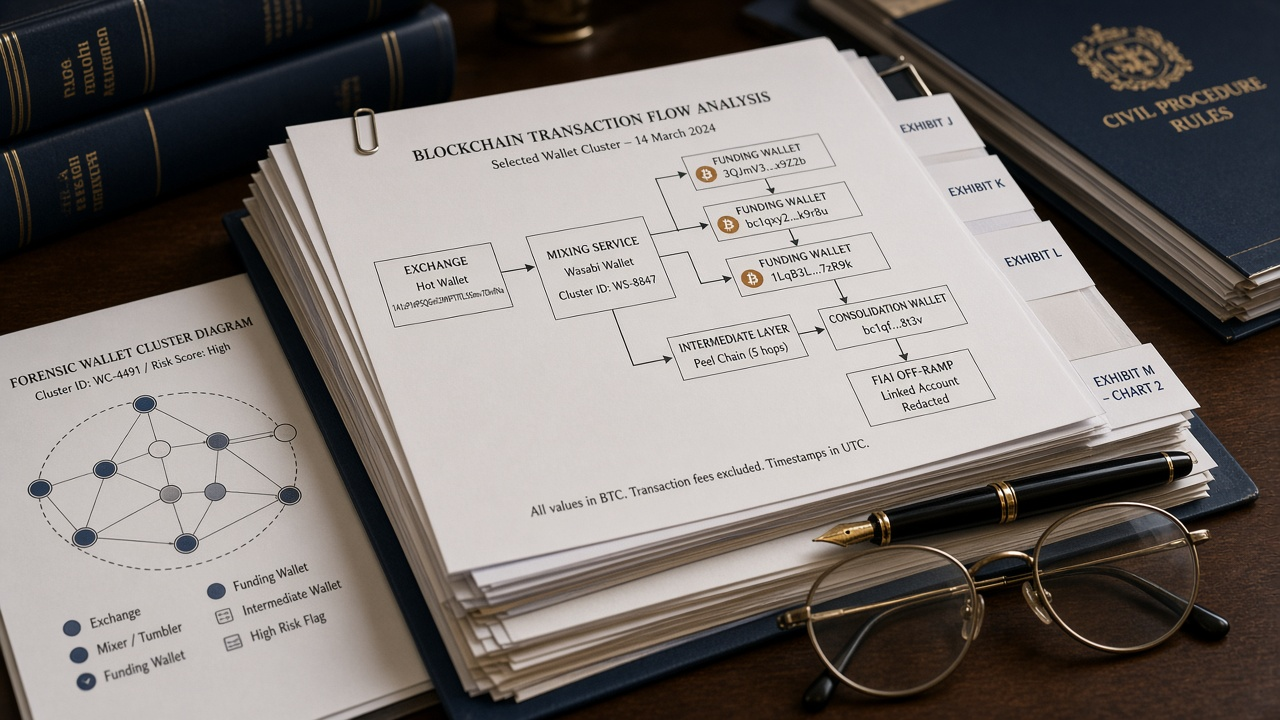
How tracing fits the legal file
Where the facts warrant technical analysis, the practice instructs BNG Software, a Hong Kong blockchain forensics partner, to reconstruct transaction paths and identify whether assets still rest at a custodial venue. A forensic report alone freezes nothing. Combined with a legal claim, it can support a court order that does.
Shame is part of the fraudster's script. It has no place in a solicitor's file.
Many victims delay reporting because they feel embarrassed that a polished scheme persuaded them. These schemes are engineered by professionals and rehearsed on thousands of people. A solicitor reads facts, not fault. The sooner evidence is preserved, the more options remain. Delays give assets time to move beyond the reach of any cooperating institution.